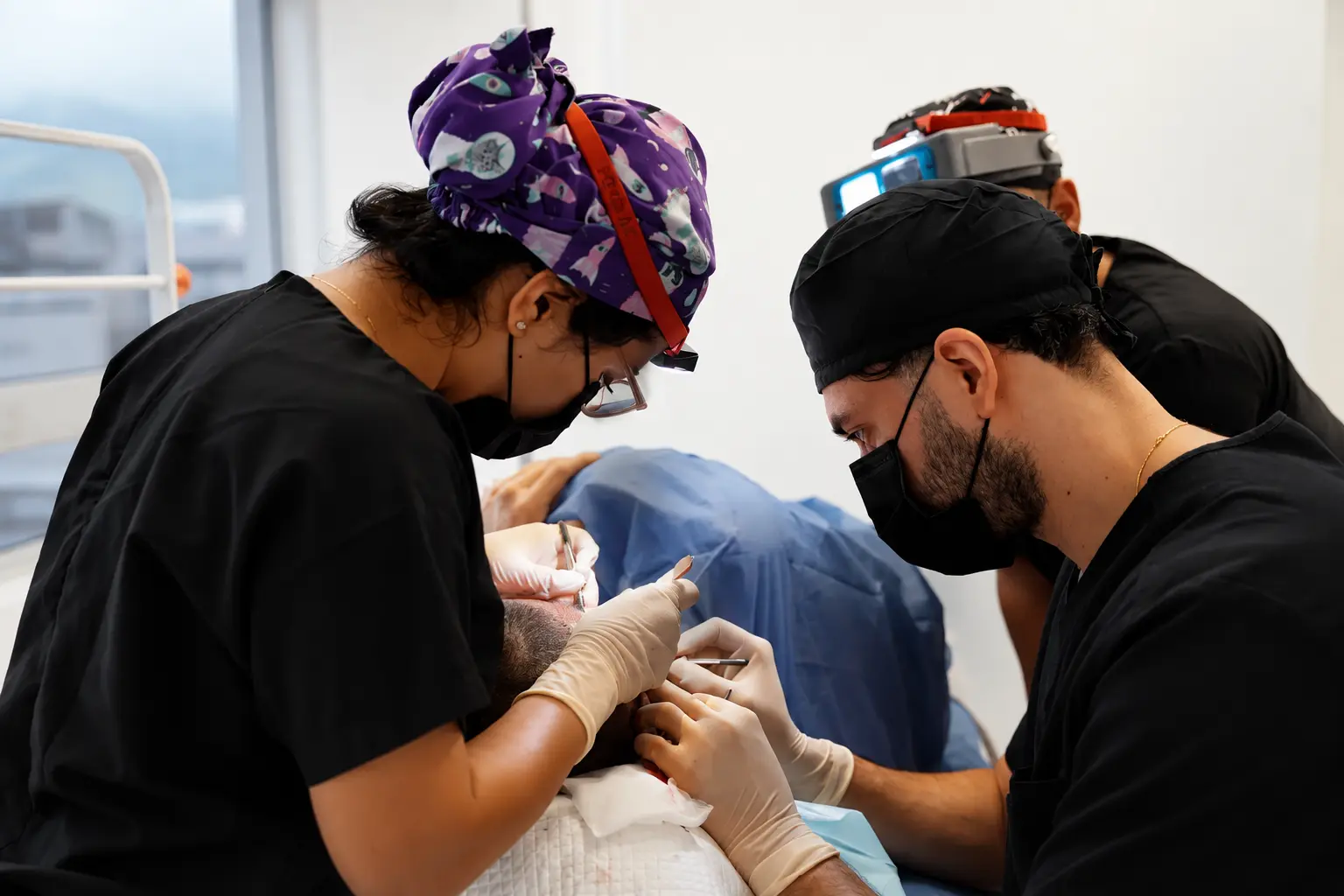
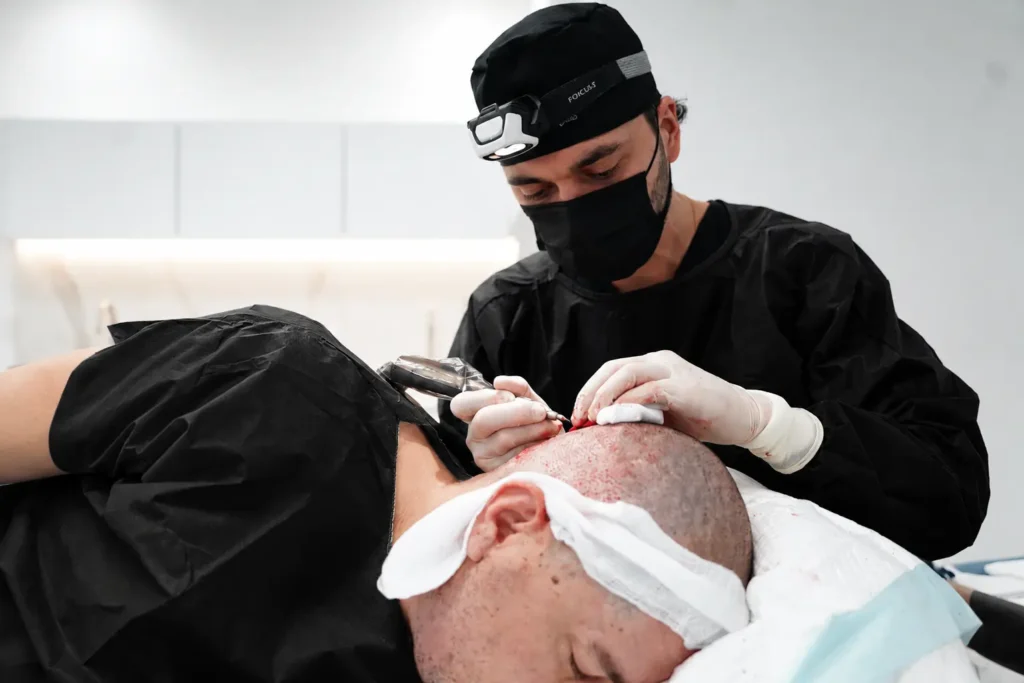
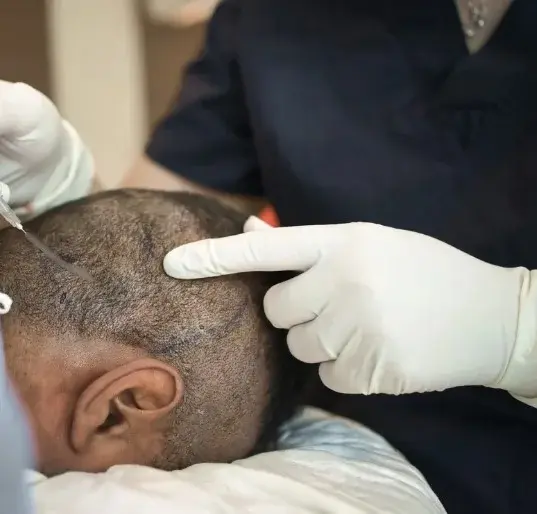
Hair loss can affect more than the way you look. For many people, changes in the hairline, temples or crown gradually become something they notice every time they look in the mirror. A hair transplant can help restore coverage using your own healthy follicles, but the right approach begins with understanding your pattern of hair loss, donor area and long-term goals.
At Clínica Be Dharma, we offer hair transplant procedures in Medellin with both manual FUE and the latest-generation ARTAS iX robotic-assisted system. Each treatment plan is based on an individual assessment rather than a standard number of grafts or a one-size-fits-all hairline.
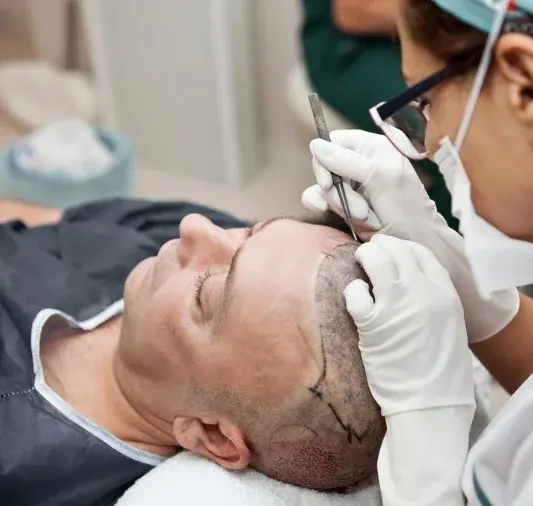
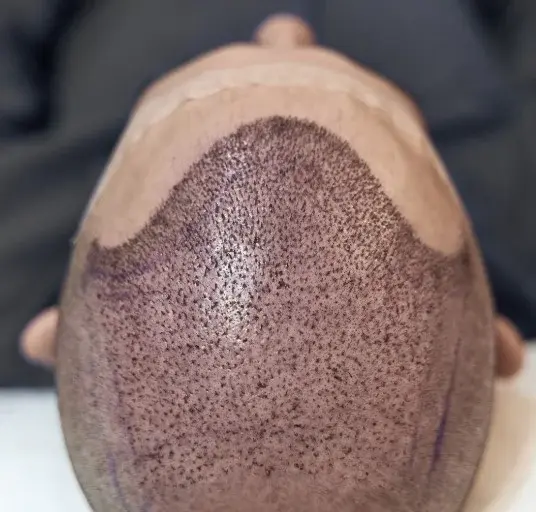
A hair transplant is a procedure that redistributes healthy hair follicles from a donor area—usually located at the back or sides of the scalp—to areas affected by thinning or hair loss. Rather than creating new hair follicles, the procedure carefully relocates existing follicular units to improve coverage, density and the overall appearance of the hairline.
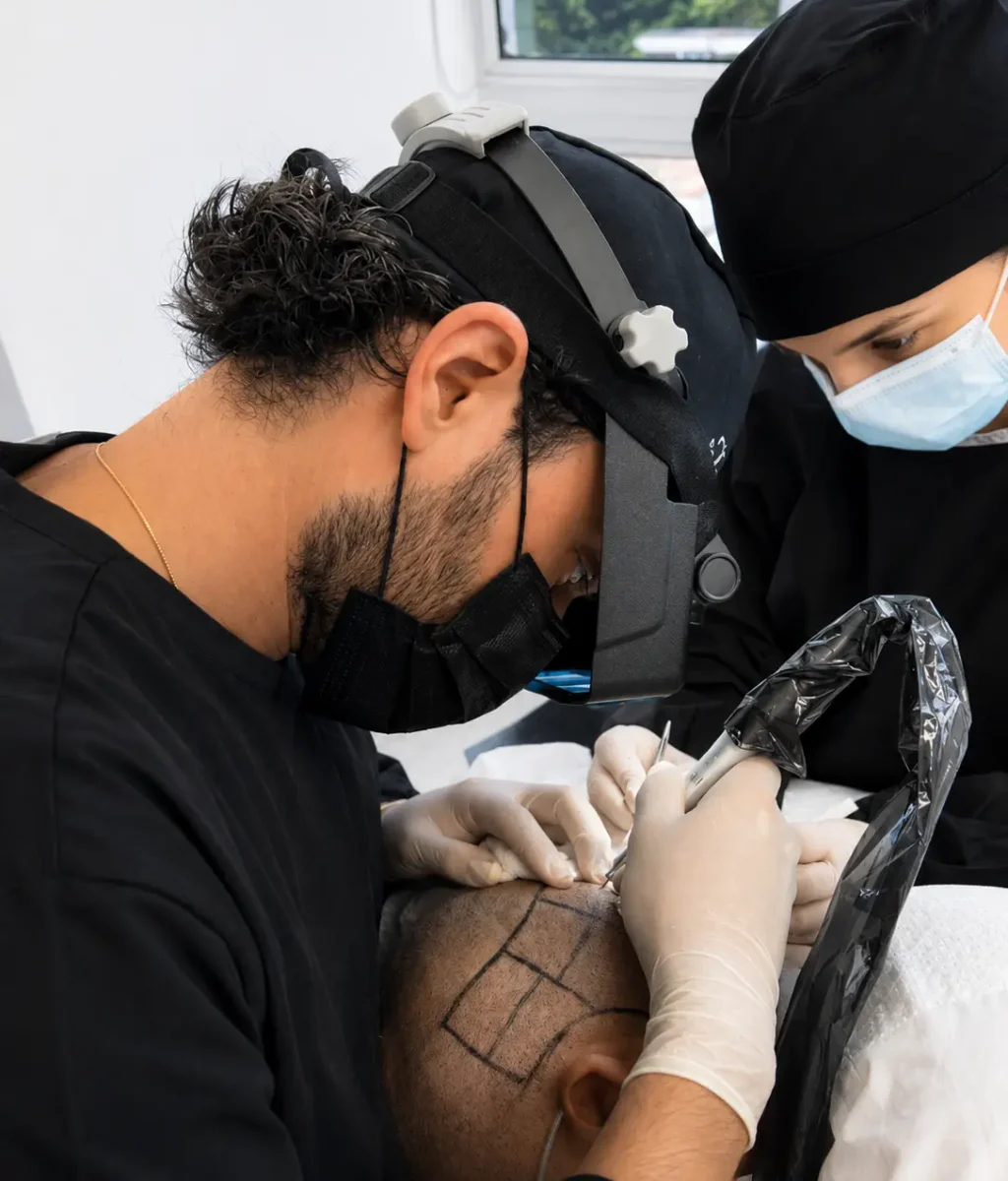
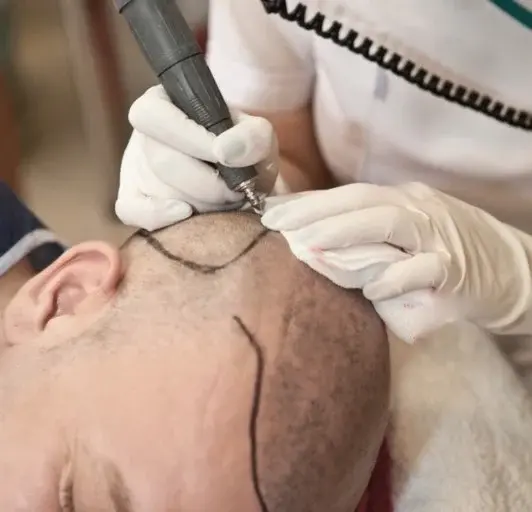
The design is just as important as the extraction itself. Hairline position, follicle direction, density, donor availability and the progression of hair loss all need to be considered before treatment.
At Clínica Be Dharma, hair restoration can be performed using two approaches:
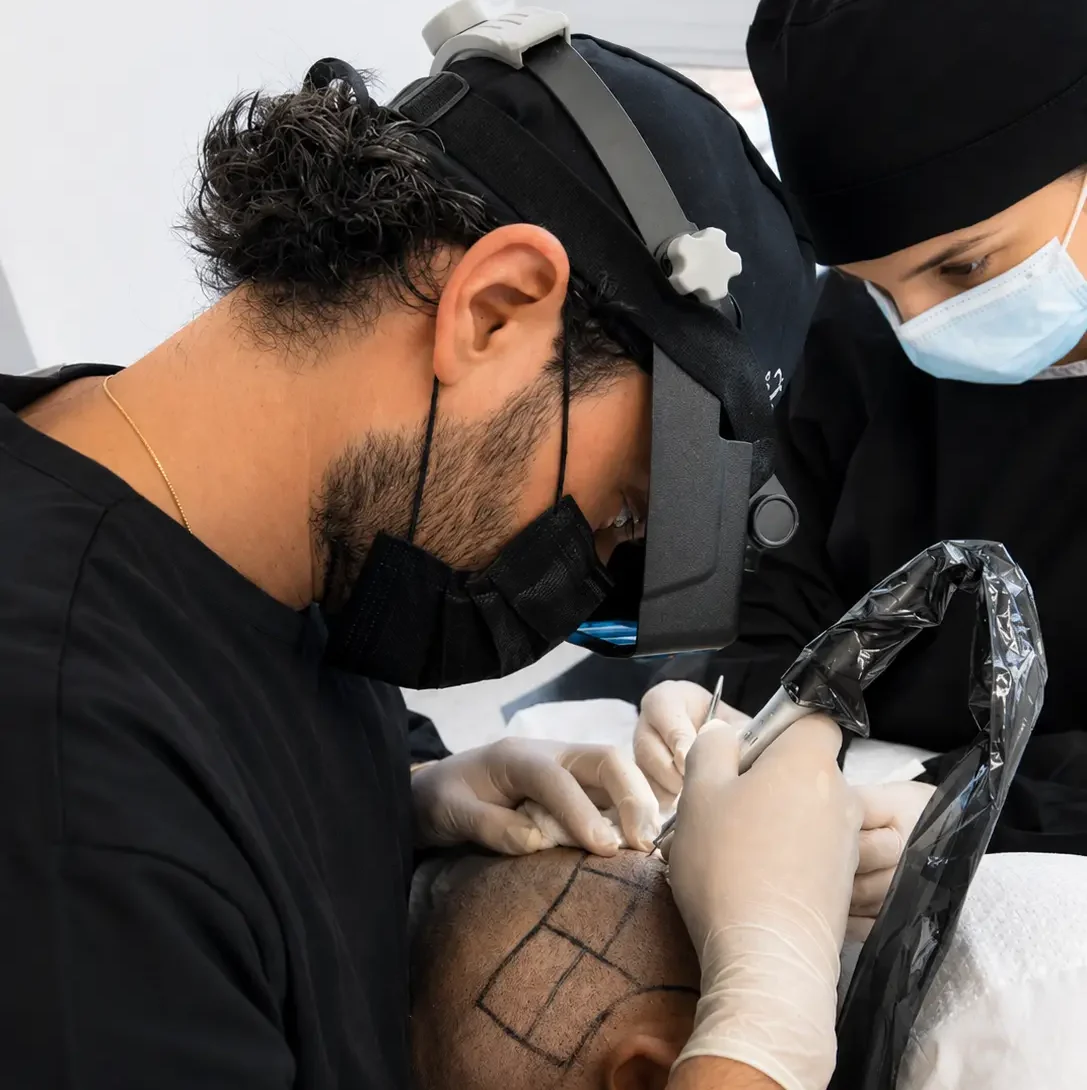
Individual follicular units are extracted one by one from a suitable donor area, usually at the back or sides of the scalp, and carefully transplanted into areas affected by thinning or hair loss. The placement of each graft is planned according to the patient’s hairline, existing density, facial proportions and long-term restoration goals.
Because FUE does not require the removal of a strip of scalp, it avoids the linear donor scar associated with traditional strip-harvesting techniques. The number of grafts and the distribution required are defined individually after evaluating the donor area and the extent of hair loss.
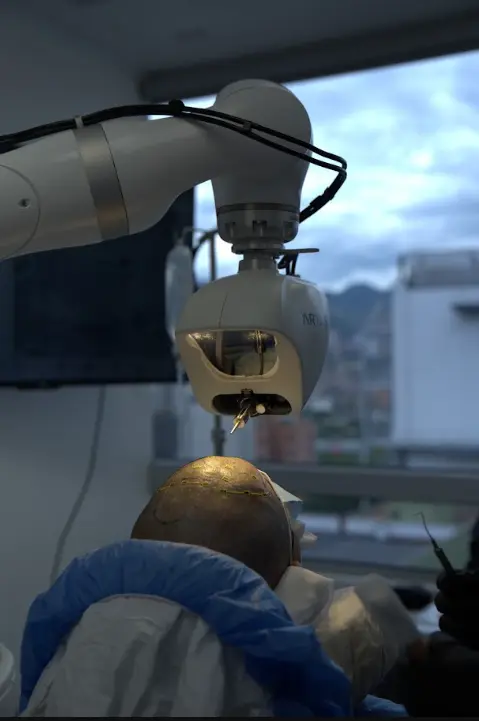
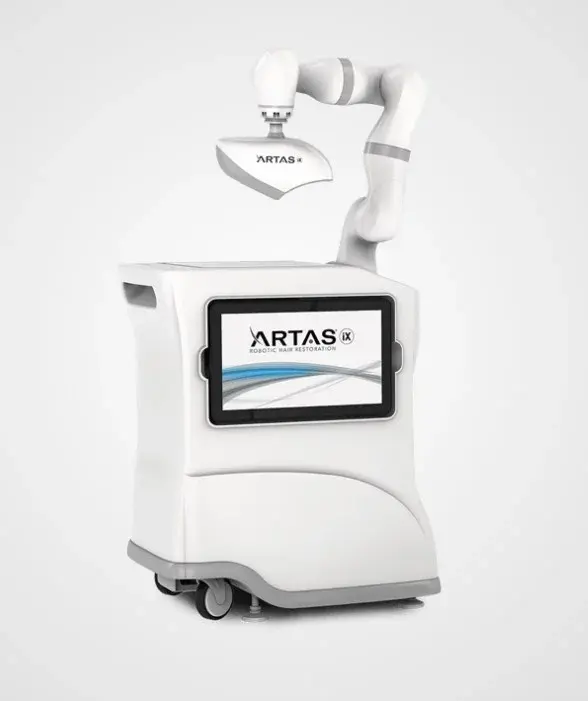
ARTAS iX brings robotic assistance, digital imaging and computer-guided precision into different stages of the hair transplantation process while remaining under medical supervision. Both approaches are designed around the same essential principle: preserving healthy follicular units and redistributing them according to a personalized restoration plan.
The appropriate option depends on factors such as your donor area, hair characteristics, degree of hair loss and treatment goals.
A well-planned hair transplant can provide a long-term approach to restoring areas affected by hair loss while using the patient’s own follicles.
Some of the main benefits include:
Hairline design, follicle direction and graft distribution can be planned according to your facial proportions and existing hair rather than following a standard template.
The procedure redistributes follicles from a suitable donor area rather than relying on artificial hair or external implants.
Individual extraction avoids the linear scar associated with strip harvesting.
The number and distribution of follicles are determined according to your donor capacity and the areas being treated.
Hair transplantation is generally performed with local anesthesia and does not require the incisions associated with more invasive surgical procedures.
Hair restoration is a gradual process. Transplanted follicles go through different stages after the procedure, and visible growth develops progressively over the following months.
Hair transplantation is most associated with scalp restoration, but follicular transplantation can be considered for several areas depending on the patient’s characteristics and donor availability.
A receding or irregular hairline can be redesigned to create better framing around the face while respecting age, facial proportions and future hair-loss patterns.
Temple recession can change the overall shape of the hairline. Carefully placed follicular units can help restore continuity between the frontal hairline and the sides of the scalp.
The crown has a unique spiral growth pattern, making follicle direction and distribution particularly important when planning transplantation in this area.
A beard transplant may be considered for men who want to improve coverage in areas with limited or irregular facial-hair growth.
An eyebrow transplant uses individual follicles to improve areas with reduced density. Because eyebrow hair grow at very specific angles, planning and placement are especially important.
Choosing where to have a hair transplant becomes even more important when you are traveling to another country for treatment. For an international patient, the decision should involve more than comparing before-and-after photographs or the number of grafts offered. You should also understand who will evaluate your case, how the procedure will be planned, which technology will be used and how communication and follow-up will be managed.
At Clínica Be Dharma, international patients can begin the process remotely through a virtual hair assessment. Our clinic is located in Torre Médica Oviedo in El Poblado, Medellin, a strategic area of the city.
Before traveling to Colombia, your virtual assessment can help us review:
For patients coming from abroad, this approach makes the process more organized: you can begin the conversation from home rather than arriving in Colombia without knowing whether transplantation is appropriate for your case.
The cost of a hair transplant varies according to the number of follicular units required, the size and location of the treatment area, the characteristics of the donor area and whether manual FUE or robotic-assisted technology is selected.
For international patients, a virtual assessment can be used as an initial step before receiving more specific information about the treatment plan and associated costs.
Local anesthesia is used during hair transplantation to make the procedure more comfortable. Patients may still experience sensations during treatment or temporary discomfort afterward, and individual experiences vary.
Your medical team will provide instructions for managing the early recovery period.
Hair transplantation does not produce the result immediately.
After treatment, transplanted hairs can initially shed as the follicles move through their natural growth cycle. New growth generally develops progressively over the following months, with continued changes in density and appearance as the transplanted hair matures.
The exact timeline varies from patient to patient.
Follicles transplanted from an appropriate donor area are selected partly because of their resistance to the pattern of hair loss affecting other areas of the scalp.
However, a hair transplant does not stop future hair loss in non-transplanted follicles. Long-term planning therefore needs to consider both the transplanted area and the progression of the patient's existing hair.
FUE refers to the extraction of individual follicular units from the donor area.
With manual FUE, extraction is performed manually by the clinical team. ARTAS iX uses computerized imaging and robotic assistance to support different precision-dependent stages of follicular transplantation.
Both require appropriate medical planning and donor-area evaluation.
Candidacy depends on several factors, including the cause and progression of hair loss, donor-area density, hair characteristics, age, medical history and expectations.
A consultation is necessary because not every patient experiencing thinning or hair loss should proceed directly to transplantation.
The early healing period varies depending on the patient and the extent of the procedure. Temporary redness, sensitivity, small scabs and mild swelling can occur after transplantation.
Returning to work, exercise, sun exposure and other activities may follow different timelines, so your post-procedure instructions should be followed individually rather than relying on a single recovery date.
Yes. International patients can begin with a virtual hair assessment before traveling to Medellin.
Photographs and information about your hair-loss history can be reviewed as part of this initial process. If transplantation appears appropriate, the next steps and in-person assessment can then be organized.
Air travel may be possible after a hair transplant, but the appropriate timing depends on the extent of your procedure and your early recovery.
For international patients, we recommend discussing your travel dates with the clinical team before purchasing a return flight immediately after treatment.
Hair transplantation may also be used to improve selected areas of the beard or eyebrows when the patient has an appropriate donor area and is considered a suitable candidate.
Each of these areas requires different planning because follicle direction, angle and density differ from those of the scalp.
Medical disclaimer. The information on this page is for general educational purposes and does not replace an individualized medical evaluation. Hair transplant procedures at Clínica Be Dharma are planned and performed by our clinical team under medical supervision, based on an assessment of your donor area, hair loss pattern, scalp condition and overall health.
Risks and considerations. As with any surgical procedure, a hair transplant carries risks, which can include bleeding, infection, temporary swelling or numbness, scarring in the donor or recipient area, temporary shedding of existing hair (shock loss), and results that vary from patient to patient. Hair transplantation may not be appropriate for every patient — active scalp infections or dermatological conditions, uncontrolled bleeding disorders, insufficient donor supply and other individual factors are reviewed during your assessment before any procedure is planned.
WhatsApp us